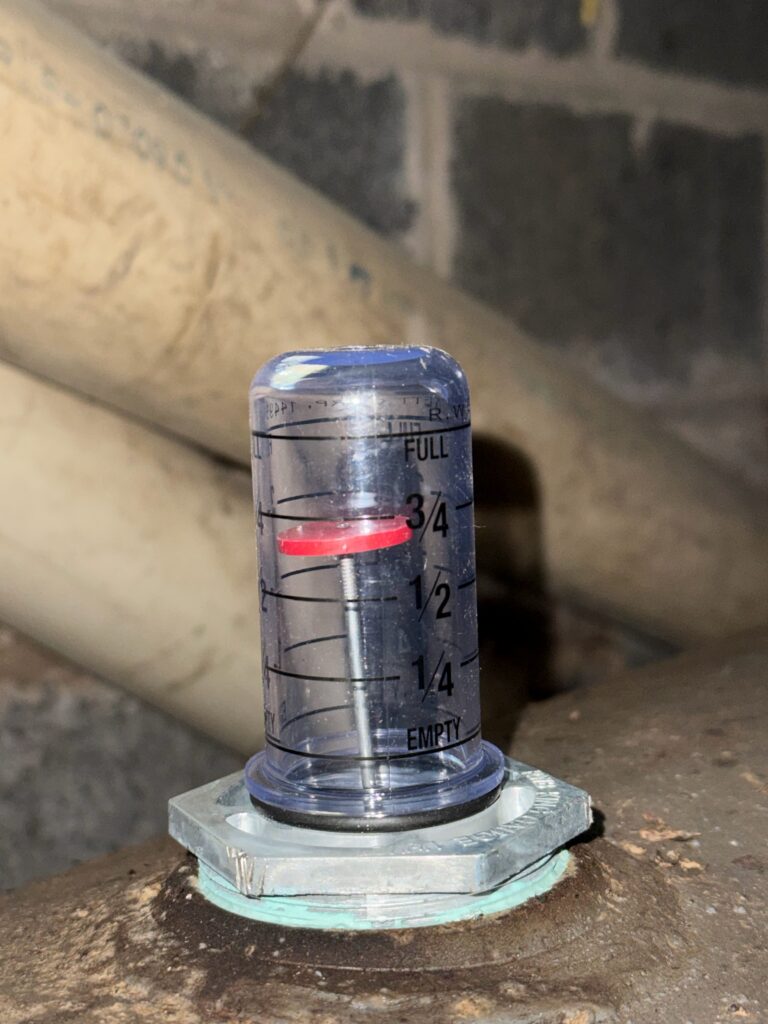
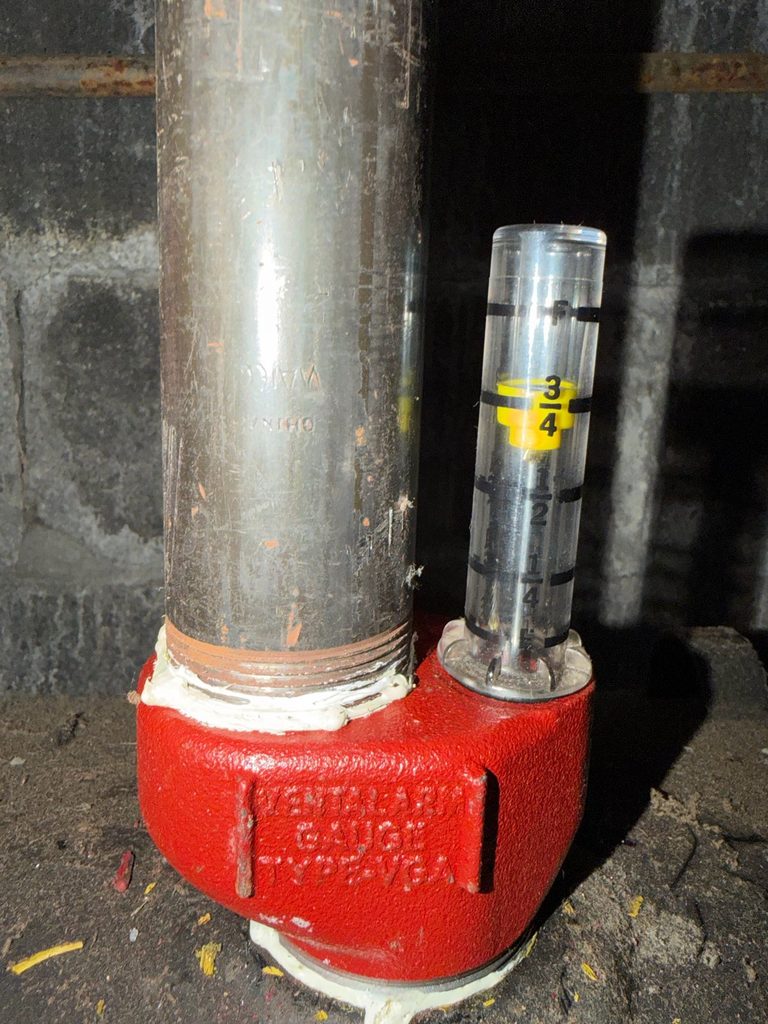
The most reliable way to tell you’re running low on heating oil is to look at the gauge on top of your tank. Most home oil tanks have a simple float gauge: a small clear cap with a marker inside that sits between “Full” and “Empty.” When the marker gets down to about 1/4, it’s time to order. Waiting until it reads near empty cuts it close, especially in cold weather, when your burner runs longer and uses oil faster.
Your heating system can give you clues too, but by the time it does, you may already be out. Here’s how the gauge works, how to read it, and the other signs worth watching.
How an oil tank float gauge works
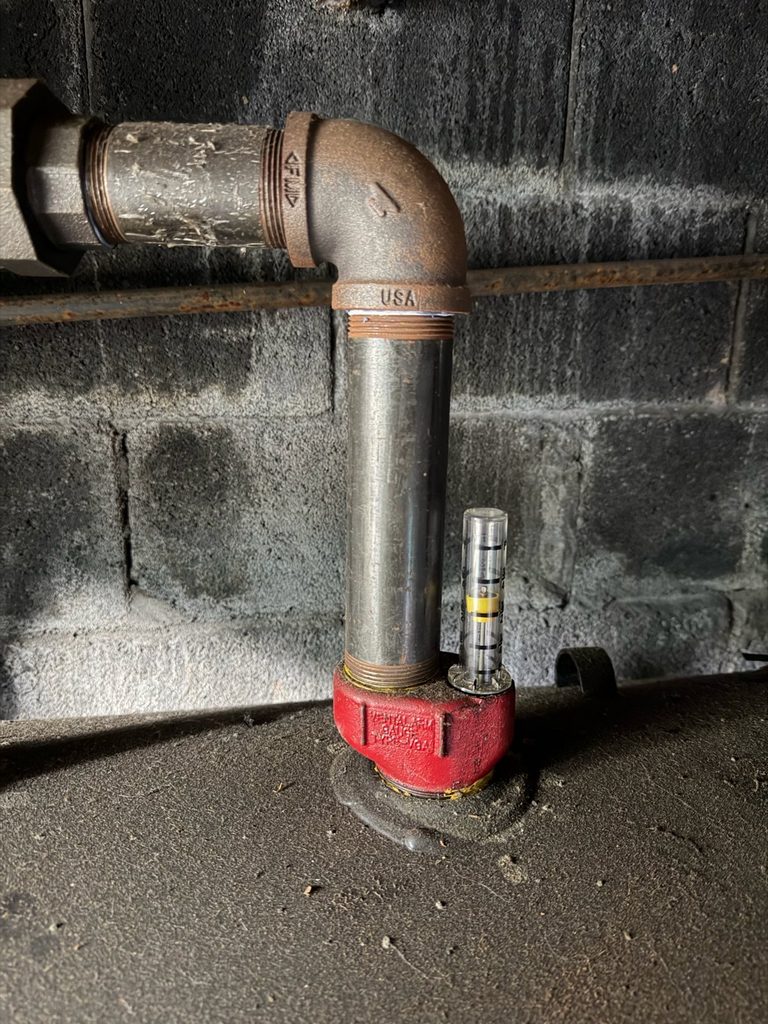
Inside the tank, a float rides on top of the oil. It’s connected to a rod that runs up into the clear cap on top of the tank. As the oil level drops, the float drops, and the marker in the cap drops with it.
The cap is usually marked Full, 3/4, 1/2, 1/4 and Empty (some gauges just say F and E).
A few things to know:
- It’s an estimate, not a meter. The marker shows roughly how full the tank is. It doesn’t show exact gallons, and the reading can be off a bit, especially near the top and bottom.
- The tank’s shape affects the reading. Many indoor tanks are ovals lying on their side. Because an oval is narrower at the top and bottom, the oil level doesn’t fall at an even rate as you burn through it.
- “Full” may not mean brim-full. Tanks are normally filled with some room left at the top, so a fresh delivery may read just under the Full line.
What “1/4 tank” means in gallons (roughly)
People often ask how many gallons are left at a quarter tank. It depends on the size of your tank, which is usually printed on a label or plate on the tank itself.
As a rough example only: on a common 275-gallon indoor tank, a 1/4 reading is often estimated at somewhere around 55 to 65 gallons. That’s an approximation for a typical tank of that size, not a measurement of yours. Your tank may be a different size, and your gauge may read a little high or low. Also, not every gallon in the tank is usable. The fuel line draws from near the bottom, and the last few inches can hold sludge and water you don’t want reaching the burner.
How long that lasts depends on the weather, the size and insulation of your house, your thermostat settings, and whether your boiler also makes your hot water. In a cold stretch, a quarter tank can go faster than you’d expect. That’s why ordering at 1/4 is a sensible habit, rather than trying to stretch it to empty.
How to read your gauge correctly
Reading the gauge is a safe homeowner check. Here’s how to get an accurate look:
- Find the gauge. It’s on top of the tank (indoor or outdoor), usually near the fill and vent pipes.
- Look at it at eye level. Looking down from above can make the marker seem higher or lower than it is. Use a flashlight in a dark basement.
- Read the marker against the lines. Note the closest mark: Full, 3/4, 1/2, 1/4 or Empty.
- Write it down with the date. A quick note on your phone, checked every week or two during heating season, shows you how fast your home uses oil.
Otherwise, leave the gauge alone. Don’t unscrew, pry or tap hard on the gauge cap, and don’t open the fill or vent pipe to “stick” the tank. Those openings lead straight into the tank, and opening them can let in water or debris, cause spills or release fumes. If the gauge looks cloudy, cracked or stuck, mention it when you call.
When the gauge can’t be trusted
Float gauges are simple, but they do fail. The float can break, stick or come loose. A gauge can read the same for weeks, or show a reading that doesn’t change after a delivery. Clues that your gauge may be wrong:
- It hasn’t moved in a long time, even though the heat has been running
- It didn’t rise after a delivery
- The marker is missing, tilted or wedged against the side of the cap
- The cap is fogged or cracked so you can’t see the marker
A stuck gauge is one way people run out of oil while the gauge still shows plenty. Have it checked.
Other signs you’re running low
Besides the gauge, a few things can hint that the tank is getting low:
- It’s been a while since your last delivery, and the weather has turned colder
- The burner sounds rougher than usual, or starts and stops more often
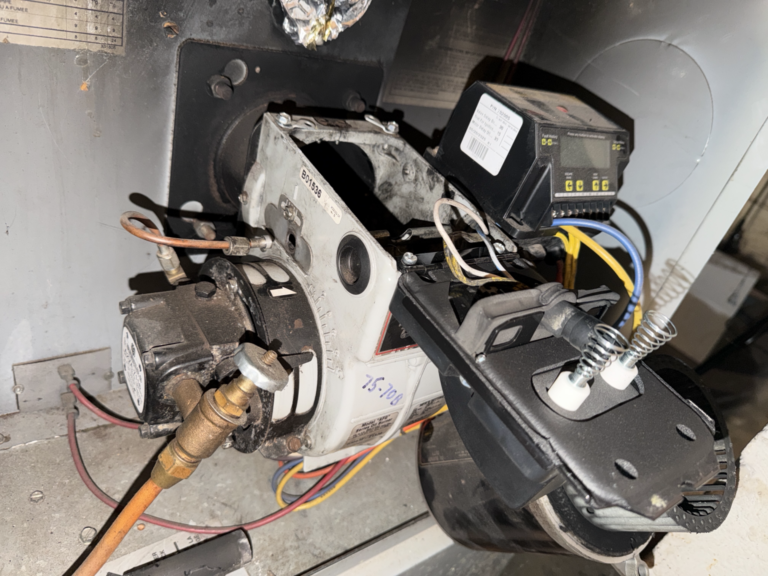
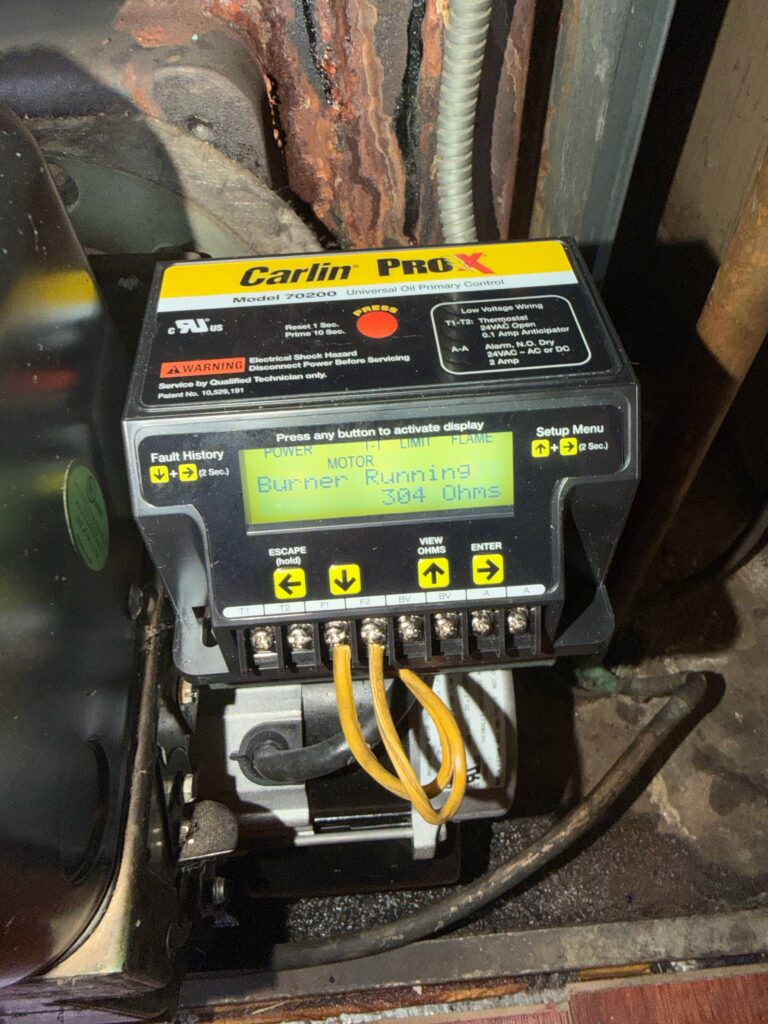
- The burner goes into reset (safety lockout). A low oil level can let the pump draw air or sediment. If your oil burner goes into safety lockout, do not press the reset button. Check the gauge and make sure the thermostat is calling for heat, then call C&L at 215-785-6161. (More on why an oil burner keeps going into reset.)
- Heat or hot water drops off, which may mean you’ve already run out
If you get to those last two, you may need oil and a service visit. A burner that runs dry often won’t restart on its own after a delivery. (See what happens if you run out of heating oil.)
Safety: what to watch for around your tank
While you’re checking the gauge, take a quick look around the tank without touching anything:
- Wet spots, drips or stains on the floor under the tank, filter or fuel line
- Rust, bulges or weeping along the tank’s seams or bottom
- A strong or lasting oil smell in the basement
If you see any of these, don’t try to clean up, tighten or patch anything. Call a professional. If you smell exhaust, a carbon monoxide alarm goes off, or anyone feels dizzy, nauseous or headachy, get everyone outside and call 911.
When to call
- Your gauge reads around 1/4 or below
- Your gauge seems stuck, broken or hard to read
- The burner is in safety lockout or you’ve lost heat
- You see signs of a leak or smell oil
How C&L Fuel can help
C&L Fuel Inc. is a local, family-owned heating, fuel and HVAC company serving Bristol, Levittown, Bensalem and nearby Bucks County towns.
- Heating oil delivery. If you like to keep an eye on the gauge yourself, call us when it’s time to order.
- Automatic delivery. Ask about it. It takes the guesswork out of watching the gauge, so you don’t have to keep an eye on your tank.
- Oil tanks, fuel lines and filters. Our techs can check a gauge that seems stuck and look over your tank and fuel line.
- Oil heating service. If you’ve run low and the burner is acting up, we can get it running right again. Regular maintenance helps too: see how often to service an oil boiler or furnace.
Frequently asked questions
When should I order heating oil?
A good habit is to order when your gauge reaches about 1/4. That leaves a cushion for cold snaps and scheduling, and keeps the burner from pulling from the bottom of the tank.
How many gallons are in my tank at 1/4?
It depends on your tank’s size and shape. On a common 275-gallon indoor tank, a quarter is often estimated at roughly 55 to 65 gallons, but treat that as an approximation, not a measurement.
How often should I check my gauge?
Every week or two during heating season, and more often in a cold stretch. Writing down the reading and the date helps you learn how fast your home uses oil.
Is it safe to check my oil tank gauge?
Yes. Looking at the gauge is safe. Just don’t open the gauge, fill pipe or vent, and call a professional if you see a leak or smell oil.
Can I get help paying for heating oil?
Pennsylvania’s LIHEAP program helps eligible households with heating costs. You apply through the Pennsylvania Department of Human Services (PA DHS) and name C&L Fuel Inc. as your vendor. See our LIHEAP page for how it works with C&L.
Getting close to a quarter tank?
Don’t wait for empty. Call C&L Fuel Inc. at 215-785-6161 to order heating oil or ask about automatic delivery. Our office hours are Monday–Friday, 9:00 AM–5:00 PM, and our phone is answered 24/7. If you’ve already run out and lost heat, call the same number.